•  
Tie-Dye Technique Of Bai Ethnic Group - Chin

Tie-Dye Technique Of Bai Ethnic Group - Chin

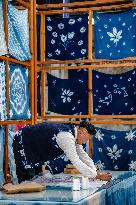
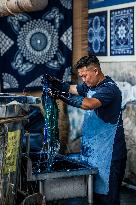
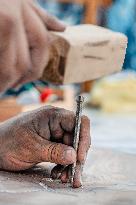
Duan Yuan, an inheritor of the tie-dye technique of Bai ethnic group, makes tie-dye designs in a dyehouse in Zhoucheng Village of Dali Bai Autonomous Prefecture, southwest China's Yunnan Province, November 21, 2025. Known as the hometown of the tie-dye technique of Bai ethnic group, Zhoucheng Village hosts over 200 households engaging in tie-dye businesses, with the number of employees exceeding 4,000. As a traditional folk technique of the Bai ethnic group, tie-dye boasts a history spanning over a thousand years and was included in the first batch of China's national intangible cultural heritage list in 2006. Tying and dyeing are the core steps in the process of making indigo tie-dye products. Artisans use needles and threads to create various patterns on the fabric, which are then dyed with plant-based dyes, resulting in blue backgrounds adorned with vivid white patterns. Photo by Hu Chao/Xinhua/ABACAPRESS.COM

  •  
Tie-Dye Technique Of Bai Ethnic Group - Chin

Tie-Dye Technique Of Bai Ethnic Group - Chin

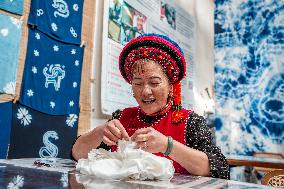
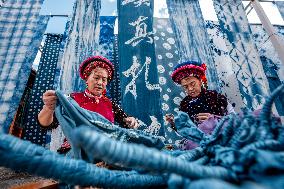
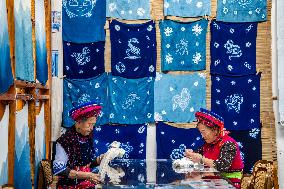
Duan Yinmei, an inheritor of the tie-dye technique of Bai ethnic group, creates knots on fabrics in a dyehouse in Zhoucheng Village of Dali Bai Autonomous Prefecture, southwest China's Yunnan Province, November 21, 2025. Known as the hometown of the tie-dye technique of Bai ethnic group, Zhoucheng Village hosts over 200 households engaging in tie-dye businesses, with the number of employees exceeding 4,000. As a traditional folk technique of the Bai ethnic group, tie-dye boasts a history spanning over a thousand years and was included in the first batch of China's national intangible cultural heritage list in 2006. Tying and dyeing are the core steps in the process of making indigo tie-dye products. Artisans use needles and threads to create various patterns on the fabric, which are then dyed with plant-based dyes, resulting in blue backgrounds adorned with vivid white patterns. Photo by Hu Chao/Xinhua/ABACAPRESS.COM

  •  
Tie-Dye Technique Of Bai Ethnic Group - Chin

Tie-Dye Technique Of Bai Ethnic Group - Chin

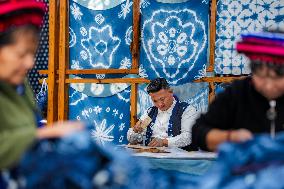
A woman experiences the tie-dye technique of Bai ethnic group in a dyehouse in Zhoucheng Village of Dali Bai Autonomous Prefecture, southwest China's Yunnan Province, November 21, 2025. Known as the hometown of the tie-dye technique of Bai ethnic group, Zhoucheng Village hosts over 200 households engaging in tie-dye businesses, with the number of employees exceeding 4,000. As a traditional folk technique of the Bai ethnic group, tie-dye boasts a history spanning over a thousand years and was included in the first batch of China's national intangible cultural heritage list in 2006. Tying and dyeing are the core steps in the process of making indigo tie-dye products. Artisans use needles and threads to create various patterns on the fabric, which are then dyed with plant-based dyes, resulting in blue backgrounds adorned with vivid white patterns. Photo by Hu Chao/Xinhua/ABACAPRESS.COM

  •  
Tie-Dye Technique Of Bai Ethnic Group - Chin

Tie-Dye Technique Of Bai Ethnic Group - Chin

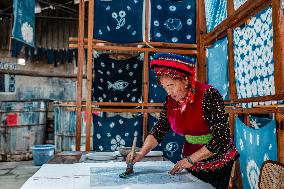
Duan Yinmei, an inheritor of the tie-dye technique of Bai ethnic group, dyes patterns on fabrics in a dyehouse in Zhoucheng Village of Dali Bai Autonomous Prefecture, southwest China's Yunnan Province, November 21, 2025. Known as the hometown of the tie-dye technique of Bai ethnic group, Zhoucheng Village hosts over 200 households engaging in tie-dye businesses, with the number of employees exceeding 4,000. As a traditional folk technique of the Bai ethnic group, tie-dye boasts a history spanning over a thousand years and was included in the first batch of China's national intangible cultural heritage list in 2006. Tying and dyeing are the core steps in the process of making indigo tie-dye products. Artisans use needles and threads to create various patterns on the fabric, which are then dyed with plant-based dyes, resulting in blue backgrounds adorned with vivid white patterns. Photo by Hu Chao/Xinhua/ABACAPRESS.COM

  •  
Tie-Dye Technique Of Bai Ethnic Group - Chin

Tie-Dye Technique Of Bai Ethnic Group - Chin

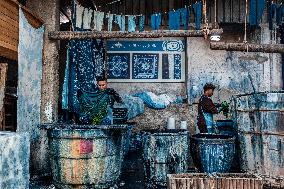
Duan Yuan, an inheritor of the tie-dye technique of Bai ethnic group, rinses dyed fabrics in a dyehouse in Zhoucheng Village of Dali Bai Autonomous Prefecture, southwest China's Yunnan Province, November 21, 2025. Known as the hometown of the tie-dye technique of Bai ethnic group, Zhoucheng Village hosts over 200 households engaging in tie-dye businesses, with the number of employees exceeding 4,000. As a traditional folk technique of the Bai ethnic group, tie-dye boasts a history spanning over a thousand years and was included in the first batch of China's national intangible cultural heritage list in 2006. Tying and dyeing are the core steps in the process of making indigo tie-dye products. Artisans use needles and threads to create various patterns on the fabric, which are then dyed with plant-based dyes, resulting in blue backgrounds adorned with vivid white patterns. Photo by Hu Chao/Xinhua/ABACAPRESS.COM

  •  
Tie-Dye Technique Of Bai Ethnic Group - Chin

Tie-Dye Technique Of Bai Ethnic Group - Chin

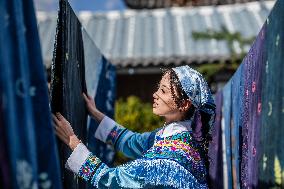
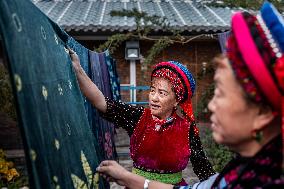
Duan Yinmei (L), an inheritor of the tie-dye technique of Bai ethnic group, and handicraftsman Duan Lilan dry tie-dye fabrics in a dyehouse in Zhoucheng Village of Dali Bai Autonomous Prefecture, southwest China's Yunnan Province, November 21, 2025. Known as the hometown of the tie-dye technique of Bai ethnic group, Zhoucheng Village hosts over 200 households engaging in tie-dye businesses, with the number of employees exceeding 4,000. As a traditional folk technique of the Bai ethnic group, tie-dye boasts a history spanning over a thousand years and was included in the first batch of China's national intangible cultural heritage list in 2006. Tying and dyeing are the core steps in the process of making indigo tie-dye products. Artisans use needles and threads to create various patterns on the fabric, which are then dyed with plant-based dyes, resulting in blue backgrounds adorned with vivid white patterns. Photo by Hu Chao/Xinhua/ABACAPRESS.COM

  •  
Tie-Dye Technique Of Bai Ethnic Group - Chin

Tie-Dye Technique Of Bai Ethnic Group - Chin

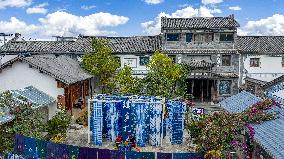
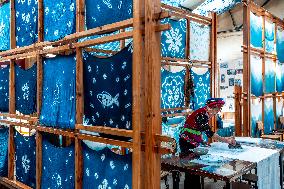
An aerial drone photo shows a scene at a dyehouse in Zhoucheng Village of Dali Bai Autonomous Prefecture, southwest China's Yunnan Province, November 21, 2025. Known as the hometown of the tie-dye technique of Bai ethnic group, Zhoucheng Village hosts over 200 households engaging in tie-dye businesses, with the number of employees exceeding 4,000. As a traditional folk technique of the Bai ethnic group, tie-dye boasts a history spanning over a thousand years and was included in the first batch of China's national intangible cultural heritage list in 2006. Tying and dyeing are the core steps in the process of making indigo tie-dye products. Artisans use needles and threads to create various patterns on the fabric, which are then dyed with plant-based dyes, resulting in blue backgrounds adorned with vivid white patterns. Photo by Hu Chao/Xinhua/ABACAPRESS.COM

  •  
Tie-Dye Technique Of Bai Ethnic Group - Chin

Tie-Dye Technique Of Bai Ethnic Group - Chin

Duan Yinmei (L), an inheritor of the tie-dye technique of Bai ethnic group, and handicraftsman Duan Lilan untie knots on fabrics in a dyehouse in Zhoucheng Village of Dali Bai Autonomous Prefecture, southwest China's Yunnan Province, November 21, 2025. Known as the hometown of the tie-dye technique of Bai ethnic group, Zhoucheng Village hosts over 200 households engaging in tie-dye businesses, with the number of employees exceeding 4,000. As a traditional folk technique of the Bai ethnic group, tie-dye boasts a history spanning over a thousand years and was included in the first batch of China's national intangible cultural heritage list in 2006. Tying and dyeing are the core steps in the process of making indigo tie-dye products. Artisans use needles and threads to create various patterns on the fabric, which are then dyed with plant-based dyes, resulting in blue backgrounds adorned with vivid white patterns. Photo by Hu Chao/Xinhua/ABACAPRESS.COM

  •  
Tie-Dye Technique Of Bai Ethnic Group - Chin

Tie-Dye Technique Of Bai Ethnic Group - Chin

Duan Yinmei (L), an inheritor of the tie-dye technique of Bai ethnic group, and handicraftsman Duan Lilan untie knots on fabrics in a dyehouse in Zhoucheng Village of Dali Bai Autonomous Prefecture, southwest China's Yunnan Province, November 21, 2025. Known as the hometown of the tie-dye technique of Bai ethnic group, Zhoucheng Village hosts over 200 households engaging in tie-dye businesses, with the number of employees exceeding 4,000. As a traditional folk technique of the Bai ethnic group, tie-dye boasts a history spanning over a thousand years and was included in the first batch of China's national intangible cultural heritage list in 2006. Tying and dyeing are the core steps in the process of making indigo tie-dye products. Artisans use needles and threads to create various patterns on the fabric, which are then dyed with plant-based dyes, resulting in blue backgrounds adorned with vivid white patterns. Photo by Hu Chao/Xinhua/ABACAPRESS.COM

  •  
Tie-Dye Technique Of Bai Ethnic Group - Chin

Tie-Dye Technique Of Bai Ethnic Group - Chin

Duan Yuan (L), an inheritor of the tie-dye technique of Bai ethnic group, dyes fabrics in a dyehouse in Zhoucheng Village of Dali Bai Autonomous Prefecture, southwest China's Yunnan Province, November 21, 2025. Known as the hometown of the tie-dye technique of Bai ethnic group, Zhoucheng Village hosts over 200 households engaging in tie-dye businesses, with the number of employees exceeding 4,000. As a traditional folk technique of the Bai ethnic group, tie-dye boasts a history spanning over a thousand years and was included in the first batch of China's national intangible cultural heritage list in 2006. Tying and dyeing are the core steps in the process of making indigo tie-dye products. Artisans use needles and threads to create various patterns on the fabric, which are then dyed with plant-based dyes, resulting in blue backgrounds adorned with vivid white patterns. Photo by Hu Chao/Xinhua/ABACAPRESS.COM

  •  
Tie-Dye Technique Of Bai Ethnic Group - Chin

Tie-Dye Technique Of Bai Ethnic Group - Chin

Duan Yuan, an inheritor of the tie-dye technique of Bai ethnic group, makes tie-dye designs in a dyehouse in Zhoucheng Village of Dali Bai Autonomous Prefecture, southwest China's Yunnan Province, November 21, 2025. Known as the hometown of the tie-dye technique of Bai ethnic group, Zhoucheng Village hosts over 200 households engaging in tie-dye businesses, with the number of employees exceeding 4,000. As a traditional folk technique of the Bai ethnic group, tie-dye boasts a history spanning over a thousand years and was included in the first batch of China's national intangible cultural heritage list in 2006. Tying and dyeing are the core steps in the process of making indigo tie-dye products. Artisans use needles and threads to create various patterns on the fabric, which are then dyed with plant-based dyes, resulting in blue backgrounds adorned with vivid white patterns. Photo by Hu Chao/Xinhua/ABACAPRESS.COM

  •  
Tie-Dye Technique Of Bai Ethnic Group - Chin

Tie-Dye Technique Of Bai Ethnic Group - Chin

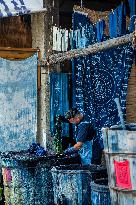
Duan Yuan, an inheritor of the tie-dye technique of Bai ethnic group, dyes fabrics in a dyehouse in Zhoucheng Village of Dali Bai Autonomous Prefecture, southwest China's Yunnan Province, November 21, 2025. Known as the hometown of the tie-dye technique of Bai ethnic group, Zhoucheng Village hosts over 200 households engaging in tie-dye businesses, with the number of employees exceeding 4,000. As a traditional folk technique of the Bai ethnic group, tie-dye boasts a history spanning over a thousand years and was included in the first batch of China's national intangible cultural heritage list in 2006. Tying and dyeing are the core steps in the process of making indigo tie-dye products. Artisans use needles and threads to create various patterns on the fabric, which are then dyed with plant-based dyes, resulting in blue backgrounds adorned with vivid white patterns. Photo by Hu Chao/Xinhua/ABACAPRESS.COM

  •  
Tie-Dye Technique Of Bai Ethnic Group - Chin

Tie-Dye Technique Of Bai Ethnic Group - Chin

Duan Yuan, an inheritor of the tie-dye technique of Bai ethnic group, dyes fabrics in a dyehouse in Zhoucheng Village of Dali Bai Autonomous Prefecture, southwest China's Yunnan Province, November 21, 2025. Known as the hometown of the tie-dye technique of Bai ethnic group, Zhoucheng Village hosts over 200 households engaging in tie-dye businesses, with the number of employees exceeding 4,000. As a traditional folk technique of the Bai ethnic group, tie-dye boasts a history spanning over a thousand years and was included in the first batch of China's national intangible cultural heritage list in 2006. Tying and dyeing are the core steps in the process of making indigo tie-dye products. Artisans use needles and threads to create various patterns on the fabric, which are then dyed with plant-based dyes, resulting in blue backgrounds adorned with vivid white patterns. Photo by Hu Chao/Xinhua/ABACAPRESS.COM

  •  
Tie-Dye Technique Of Bai Ethnic Group - Chin

Tie-Dye Technique Of Bai Ethnic Group - Chin

Duan Yuan, an inheritor of the tie-dye technique of Bai ethnic group, makes tie-dye designs in a dyehouse in Zhoucheng Village of Dali Bai Autonomous Prefecture, southwest China's Yunnan Province, November 21, 2025. Known as the hometown of the tie-dye technique of Bai ethnic group, Zhoucheng Village hosts over 200 households engaging in tie-dye businesses, with the number of employees exceeding 4,000. As a traditional folk technique of the Bai ethnic group, tie-dye boasts a history spanning over a thousand years and was included in the first batch of China's national intangible cultural heritage list in 2006. Tying and dyeing are the core steps in the process of making indigo tie-dye products. Artisans use needles and threads to create various patterns on the fabric, which are then dyed with plant-based dyes, resulting in blue backgrounds adorned with vivid white patterns. Photo by Hu Chao/Xinhua/ABACAPRESS.COM

  •  
Tie-Dye Technique Of Bai Ethnic Group - Chin

Tie-Dye Technique Of Bai Ethnic Group - Chin

Duan Yinmei, an inheritor of the tie-dye technique of Bai ethnic group, unties knots on fabrics in a dyehouse in Zhoucheng Village of Dali Bai Autonomous Prefecture, southwest China's Yunnan Province, November 21, 2025. Known as the hometown of the tie-dye technique of Bai ethnic group, Zhoucheng Village hosts over 200 households engaging in tie-dye businesses, with the number of employees exceeding 4,000. As a traditional folk technique of the Bai ethnic group, tie-dye boasts a history spanning over a thousand years and was included in the first batch of China's national intangible cultural heritage list in 2006. Tying and dyeing are the core steps in the process of making indigo tie-dye products. Artisans use needles and threads to create various patterns on the fabric, which are then dyed with plant-based dyes, resulting in blue backgrounds adorned with vivid white patterns. Photo by Hu Chao/Xinhua/ABACAPRESS.COM

  •  
Tie-Dye Technique Of Bai Ethnic Group - Chin

Tie-Dye Technique Of Bai Ethnic Group - Chin

Duan Yinmei, an inheritor of the tie-dye technique of Bai ethnic group, dyes patterns on fabrics in a dyehouse in Zhoucheng Village of Dali Bai Autonomous Prefecture, southwest China's Yunnan Province, November 21, 2025. Known as the hometown of the tie-dye technique of Bai ethnic group, Zhoucheng Village hosts over 200 households engaging in tie-dye businesses, with the number of employees exceeding 4,000. As a traditional folk technique of the Bai ethnic group, tie-dye boasts a history spanning over a thousand years and was included in the first batch of China's national intangible cultural heritage list in 2006. Tying and dyeing are the core steps in the process of making indigo tie-dye products. Artisans use needles and threads to create various patterns on the fabric, which are then dyed with plant-based dyes, resulting in blue backgrounds adorned with vivid white patterns. Photo by Hu Chao/Xinhua/ABACAPRESS.COM

  •  
Tie-Dye Technique Of Bai Ethnic Group - Chin

Tie-Dye Technique Of Bai Ethnic Group - Chin

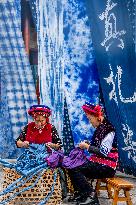
Duan Yinmei (R), an inheritor of the tie-dye technique of Bai ethnic group, and handicraftsman Duan Lilan create knots on fabrics in a dyehouse in Zhoucheng Village of Dali Bai Autonomous Prefecture, southwest China's Yunnan Province, November 21, 2025. Known as the hometown of the tie-dye technique of Bai ethnic group, Zhoucheng Village hosts over 200 households engaging in tie-dye businesses, with the number of employees exceeding 4,000. As a traditional folk technique of the Bai ethnic group, tie-dye boasts a history spanning over a thousand years and was included in the first batch of China's national intangible cultural heritage list in 2006. Tying and dyeing are the core steps in the process of making indigo tie-dye products. Artisans use needles and threads to create various patterns on the fabric, which are then dyed with plant-based dyes, resulting in blue backgrounds adorned with vivid white patterns. Photo by Hu Chao/Xinhua/ABACAPRESS.COM

  •  
Bangladeshi Dyeing Workers – Dhaka

Bangladeshi Dyeing Workers – Dhaka

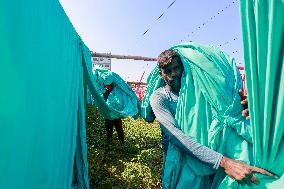
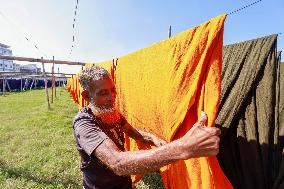
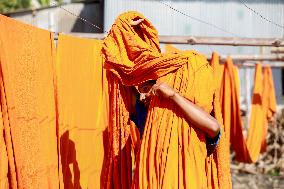
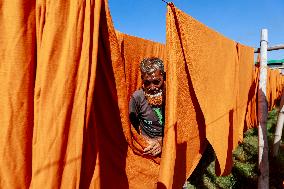
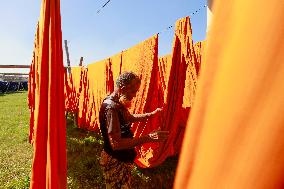
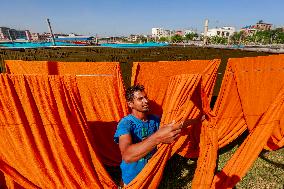
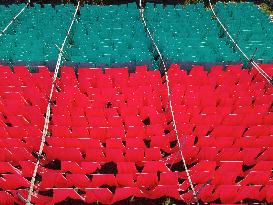
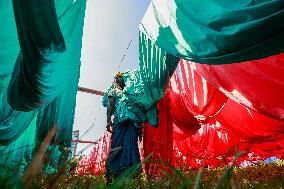
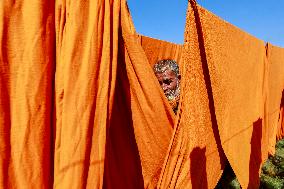
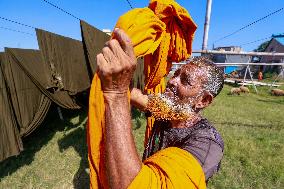
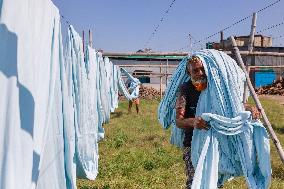
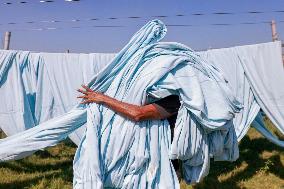
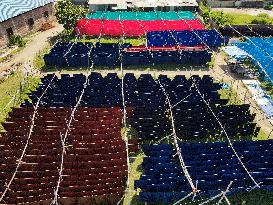
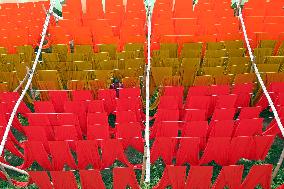
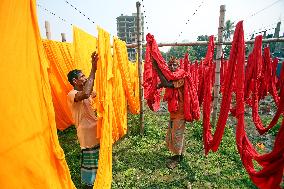
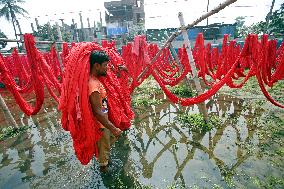
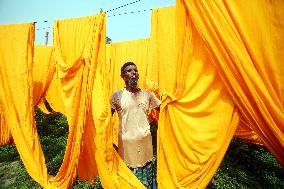
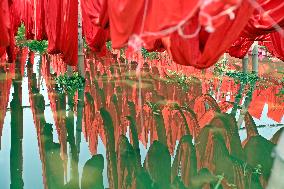
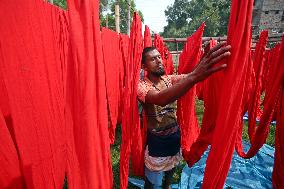
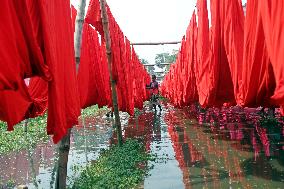
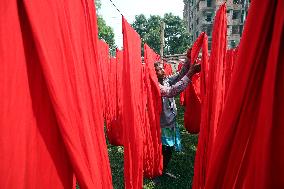
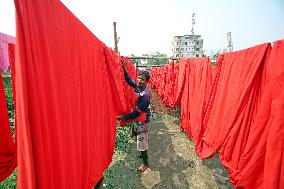
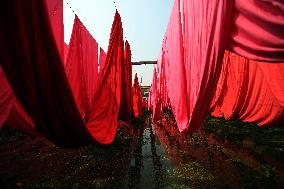
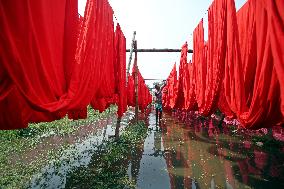
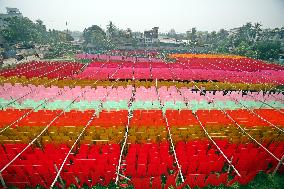
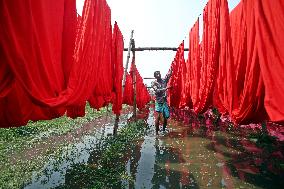
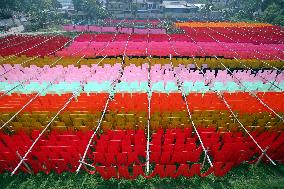
Bangladeshi workers collect fabric after dry them under the sun at a dyeing factory in Narayanganj, near Dhaka, Bangladesh, on November 9, 2024. In Narayanganj’s Fatullah, vibrantly dyed fabrics stretch across an open field, glowing as they dry under the sun. Factory workers pour their heart and soul into each step of the dyeing process, transforming raw fabric into material that will soon become T-shirts. Photo by Suvra Kanti Das/ABACAPRESS.COM

  •  
Bangladeshi Dyeing Workers – Dhaka

Bangladeshi Dyeing Workers – Dhaka

Bangladeshi workers collect fabric after dry them under the sun at a dyeing factory in Narayanganj, near Dhaka, Bangladesh, on November 9, 2024. In Narayanganj’s Fatullah, vibrantly dyed fabrics stretch across an open field, glowing as they dry under the sun. Factory workers pour their heart and soul into each step of the dyeing process, transforming raw fabric into material that will soon become T-shirts. Photo by Suvra Kanti Das/ABACAPRESS.COM

  •  
Bangladeshi Dyeing Workers – Dhaka

Bangladeshi Dyeing Workers – Dhaka

Bangladeshi workers collect fabric after dry them under the sun at a dyeing factory in Narayanganj, near Dhaka, Bangladesh, on November 9, 2024. In Narayanganj’s Fatullah, vibrantly dyed fabrics stretch across an open field, glowing as they dry under the sun. Factory workers pour their heart and soul into each step of the dyeing process, transforming raw fabric into material that will soon become T-shirts. Photo by Suvra Kanti Das/ABACAPRESS.COM

  •  
Bangladeshi Dyeing Workers – Dhaka

Bangladeshi Dyeing Workers – Dhaka

Bangladeshi workers collect fabric after dry them under the sun at a dyeing factory in Narayanganj, near Dhaka, Bangladesh, on November 9, 2024. In Narayanganj’s Fatullah, vibrantly dyed fabrics stretch across an open field, glowing as they dry under the sun. Factory workers pour their heart and soul into each step of the dyeing process, transforming raw fabric into material that will soon become T-shirts. Photo by Suvra Kanti Das/ABACAPRESS.COM

  •  
Bangladeshi Dyeing Workers – Dhaka

Bangladeshi Dyeing Workers – Dhaka

Bangladeshi workers collect fabric after dry them under the sun at a dyeing factory in Narayanganj, near Dhaka, Bangladesh, on November 9, 2024. In Narayanganj’s Fatullah, vibrantly dyed fabrics stretch across an open field, glowing as they dry under the sun. Factory workers pour their heart and soul into each step of the dyeing process, transforming raw fabric into material that will soon become T-shirts. Photo by Suvra Kanti Das/ABACAPRESS.COM

  •  
Bangladeshi Dyeing Workers – Dhaka

Bangladeshi Dyeing Workers – Dhaka

Bangladeshi workers collect fabric after dry them under the sun at a dyeing factory in Narayanganj, near Dhaka, Bangladesh, on November 9, 2024. In Narayanganj’s Fatullah, vibrantly dyed fabrics stretch across an open field, glowing as they dry under the sun. Factory workers pour their heart and soul into each step of the dyeing process, transforming raw fabric into material that will soon become T-shirts. Photo by Suvra Kanti Das/ABACAPRESS.COM

  •  
Bangladeshi Dyeing Workers – Dhaka

Bangladeshi Dyeing Workers – Dhaka

Bangladeshi workers collect fabric after dry them under the sun at a dyeing factory in Narayanganj, near Dhaka, Bangladesh, on November 9, 2024. In Narayanganj’s Fatullah, vibrantly dyed fabrics stretch across an open field, glowing as they dry under the sun. Factory workers pour their heart and soul into each step of the dyeing process, transforming raw fabric into material that will soon become T-shirts. Photo by Suvra Kanti Das/ABACAPRESS.COM

  •  
Bangladeshi Dyeing Workers – Dhaka

Bangladeshi Dyeing Workers – Dhaka

Bangladeshi workers collect fabric after dry them under the sun at a dyeing factory in Narayanganj, near Dhaka, Bangladesh, on November 9, 2024. In Narayanganj’s Fatullah, vibrantly dyed fabrics stretch across an open field, glowing as they dry under the sun. Factory workers pour their heart and soul into each step of the dyeing process, transforming raw fabric into material that will soon become T-shirts. Photo by Suvra Kanti Das/ABACAPRESS.COM

  •  
Bangladeshi Dyeing Workers – Dhaka

Bangladeshi Dyeing Workers – Dhaka

Bangladeshi workers collect fabric after dry them under the sun at a dyeing factory in Narayanganj, near Dhaka, Bangladesh, on November 9, 2024. In Narayanganj’s Fatullah, vibrantly dyed fabrics stretch across an open field, glowing as they dry under the sun. Factory workers pour their heart and soul into each step of the dyeing process, transforming raw fabric into material that will soon become T-shirts. Photo by Suvra Kanti Das/ABACAPRESS.COM

  •  
Bangladeshi Dyeing Workers – Dhaka

Bangladeshi Dyeing Workers – Dhaka

Bangladeshi workers collect fabric after dry them under the sun at a dyeing factory in Narayanganj, near Dhaka, Bangladesh, on November 9, 2024. In Narayanganj’s Fatullah, vibrantly dyed fabrics stretch across an open field, glowing as they dry under the sun. Factory workers pour their heart and soul into each step of the dyeing process, transforming raw fabric into material that will soon become T-shirts. Photo by Suvra Kanti Das/ABACAPRESS.COM

  •  
Bangladeshi Dyeing Workers – Dhaka

Bangladeshi Dyeing Workers – Dhaka

Bangladeshi workers collect fabric after dry them under the sun at a dyeing factory in Narayanganj, near Dhaka, Bangladesh, on November 9, 2024. In Narayanganj’s Fatullah, vibrantly dyed fabrics stretch across an open field, glowing as they dry under the sun. Factory workers pour their heart and soul into each step of the dyeing process, transforming raw fabric into material that will soon become T-shirts. Photo by Suvra Kanti Das/ABACAPRESS.COM

  •  
Bangladeshi Dyeing Workers – Dhaka

Bangladeshi Dyeing Workers – Dhaka

Bangladeshi workers collect fabric after dry them under the sun at a dyeing factory in Narayanganj, near Dhaka, Bangladesh, on November 9, 2024. In Narayanganj’s Fatullah, vibrantly dyed fabrics stretch across an open field, glowing as they dry under the sun. Factory workers pour their heart and soul into each step of the dyeing process, transforming raw fabric into material that will soon become T-shirts. Photo by Suvra Kanti Das/ABACAPRESS.COM

  •  
Bangladeshi Dyeing Workers – Dhaka

Bangladeshi Dyeing Workers – Dhaka

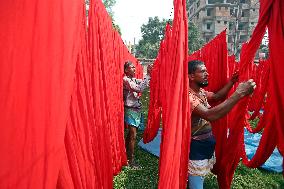
Bangladeshi workers collect fabric after dry them under the sun at a dyeing factory in Narayanganj, near Dhaka, Bangladesh, on November 9, 2024. In Narayanganj’s Fatullah, vibrantly dyed fabrics stretch across an open field, glowing as they dry under the sun. Factory workers pour their heart and soul into each step of the dyeing process, transforming raw fabric into material that will soon become T-shirts. Photo by Suvra Kanti Das/ABACAPRESS.COM

  •  
Dyeing Factory - Dhaka

Dyeing Factory - Dhaka

Bangladeshi workers collect fabric after drying them under the sun at a dyeing factory in Narayanganj, near Dhaka, Bangladesh, on March 20, 2024. Photo by Habibur Rahman/ABACAPRESS.COM

  •  
Dyeing Factory - Dhaka

Dyeing Factory - Dhaka

Bangladeshi workers collect fabric after drying them under the sun at a dyeing factory in Narayanganj, near Dhaka, Bangladesh, on March 20, 2024. Photo by Habibur Rahman/ABACAPRESS.COM

  •  
Dyeing Factory - Dhaka

Dyeing Factory - Dhaka

Bangladeshi workers collect fabric after drying them under the sun at a dyeing factory in Narayanganj, near Dhaka, Bangladesh, on March 20, 2024. Photo by Habibur Rahman/ABACAPRESS.COM

  •  
Dyeing Factory - Dhaka

Dyeing Factory - Dhaka

Bangladeshi workers collect fabric after drying them under the sun at a dyeing factory in Narayanganj, near Dhaka, Bangladesh, on March 20, 2024. Photo by Habibur Rahman/ABACAPRESS.COM

  •  
Dyeing Factory - Dhaka

Dyeing Factory - Dhaka

Bangladeshi workers collect fabric after drying them under the sun at a dyeing factory in Narayanganj, near Dhaka, Bangladesh, on March 20, 2024. Photo by Habibur Rahman/ABACAPRESS.COM

  •  
Dyeing Factory - Dhaka

Dyeing Factory - Dhaka

Bangladeshi workers collect fabric after drying them under the sun at a dyeing factory in Narayanganj, near Dhaka, Bangladesh, on March 20, 2024. Photo by Habibur Rahman/ABACAPRESS.COM

  •  
Dyeing Factory - Dhaka

Dyeing Factory - Dhaka

Bangladeshi workers collect fabric after drying them under the sun at a dyeing factory in Narayanganj, near Dhaka, Bangladesh, on March 20, 2024. Photo by Habibur Rahman/ABACAPRESS.COM

  •  
Dyeing Factory - Dhaka

Dyeing Factory - Dhaka

Bangladeshi workers collect fabric after drying them under the sun at a dyeing factory in Narayanganj, near Dhaka, Bangladesh, on March 20, 2024. Photo by Habibur Rahman/ABACAPRESS.COM

  •  
Dyeing Factory - Dhaka

Dyeing Factory - Dhaka

Bangladeshi workers collect fabric after drying them under the sun at a dyeing factory in Narayanganj, near Dhaka, Bangladesh, on March 20, 2024. Photo by Habibur Rahman/ABACAPRESS.COM

  •  
Dyeing Factory - Dhaka

Dyeing Factory - Dhaka

Bangladeshi workers collect fabric after drying them under the sun at a dyeing factory in Narayanganj, near Dhaka, Bangladesh, on March 20, 2024. Photo by Habibur Rahman/ABACAPRESS.COM

  •  
Dyeing Factory - Dhaka

Dyeing Factory - Dhaka

Bangladeshi workers collect fabric after drying them under the sun at a dyeing factory in Narayanganj, near Dhaka, Bangladesh, on March 20, 2024. Photo by Habibur Rahman/ABACAPRESS.COM

  •  
Dyeing Factory - Dhaka

Dyeing Factory - Dhaka

Bangladeshi workers collect fabric after drying them under the sun at a dyeing factory in Narayanganj, near Dhaka, Bangladesh, on March 20, 2024. Photo by Habibur Rahman/ABACAPRESS.COM

  •  
Dyeing Factory - Dhaka

Dyeing Factory - Dhaka

Bangladeshi workers collect fabric after drying them under the sun at a dyeing factory in Narayanganj, near Dhaka, Bangladesh, on March 20, 2024. Photo by Habibur Rahman/ABACAPRESS.COM

  •  
Dyeing Factory - Dhaka

Dyeing Factory - Dhaka

Bangladeshi workers collect fabric after drying them under the sun at a dyeing factory in Narayanganj, near Dhaka, Bangladesh, on March 20, 2024. Photo by Habibur Rahman/ABACAPRESS.COM

  •  
Dyeing Factory - Dhaka

Dyeing Factory - Dhaka

Bangladeshi workers collect fabric after drying them under the sun at a dyeing factory in Narayanganj, near Dhaka, Bangladesh, on March 20, 2024. Photo by Habibur Rahman/ABACAPRESS.COM

  •  
CHINA-SHANGHAI-INTANGIBLE CULTURAL HERITAGE-DYEING AND WEAVING CRAFT(CN)

CHINA-SHANGHAI-INTANGIBLE CULTURAL HERITAGE-DYEING AND WEAVING CRAFT(CN)

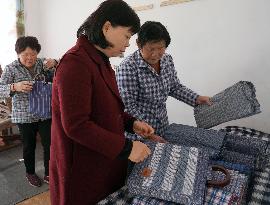
(240308) -- SHANGHAI, March 8, 2024 (Xinhua) -- Shen Jiahui (front), an inheritor of Tubu (homespun cloth) dyeing and weaving techniques, talks with villagers about the making skill in Dongmao Village, Qingpu District of Shanghai, east China, Feb. 27, 2024. Tubu dyeing and weaving craft is a local intangible cultural heritage in Shanghai. The handmade fabric with rich geometric patterns is popular in the countryside of Shanghai. In Dongmao Village, Tubu dyeing and weaving techniques are passed on and developed from generation to generation. In 2021, a training center was set up in the village to better promote the craft. Shen Jiahui, who is in charge of the training center, keeps on designing new products such as hand-bags, toys, and bookmarks, with the trainees. At present, the industry of the homespun cloth has not only increased the incomes for the locals of Dongmao Village, but also brought fame to the village. (Xinhua/Liu Ying)

  •  
CHINA-SHANGHAI-INTANGIBLE CULTURAL HERITAGE-DYEING AND WEAVING CRAFT(CN)

CHINA-SHANGHAI-INTANGIBLE CULTURAL HERITAGE-DYEING AND WEAVING CRAFT(CN)

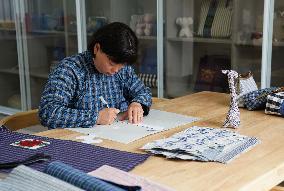
(240308) -- SHANGHAI, March 8, 2024 (Xinhua) -- Shen Jiahui, an inheritor of Tubu (homespun cloth) dyeing and weaving techniques, designs a toy at a training center in Dongmao Village, Qingpu District of Shanghai, east China, March 7, 2024. Tubu dyeing and weaving craft is a local intangible cultural heritage in Shanghai. The handmade fabric with rich geometric patterns is popular in the countryside of Shanghai. In Dongmao Village, Tubu dyeing and weaving techniques are passed on and developed from generation to generation. In 2021, a training center was set up in the village to better promote the craft. Shen Jiahui, who is in charge of the training center, keeps on designing new products such as hand-bags, toys, and bookmarks, with the trainees. At present, the industry of the homespun cloth has not only increased the incomes for the locals of Dongmao Village, but also brought fame to the village. (Xinhua/Liu Ying)

  •  
CHINA-SHANGHAI-INTANGIBLE CULTURAL HERITAGE-DYEING AND WEAVING CRAFT(CN)

CHINA-SHANGHAI-INTANGIBLE CULTURAL HERITAGE-DYEING AND WEAVING CRAFT(CN)

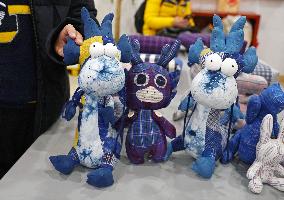
(240308) -- SHANGHAI, March 8, 2024 (Xinhua) -- This photo taken on Feb. 3, 2024 shows some toys made of Tubu (homespun cloth) during an intangible cultural heritage promotion class in Qingpu District of Shanghai, east China. Tubu dyeing and weaving craft is a local intangible cultural heritage in Shanghai. The handmade fabric with rich geometric patterns is popular in the countryside of Shanghai. In Dongmao Village, Tubu dyeing and weaving techniques are passed on and developed from generation to generation. In 2021, a training center was set up in the village to better promote the craft. Shen Jiahui, who is in charge of the training center, keeps on designing new products such as hand-bags, toys, and bookmarks, with the trainees. At present, the industry of the homespun cloth has not only increased the incomes for the locals of Dongmao Village, but also brought fame to the village. (Xinhua/Liu Ying)

  •  
CHINA-SHANGHAI-INTANGIBLE CULTURAL HERITAGE-DYEING AND WEAVING CRAFT(CN)

CHINA-SHANGHAI-INTANGIBLE CULTURAL HERITAGE-DYEING AND WEAVING CRAFT(CN)

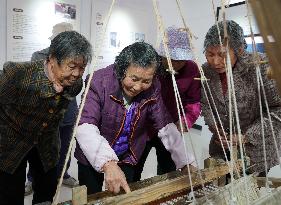
(240308) -- SHANGHAI, March 8, 2024 (Xinhua) -- Villagers looks at a loom at a training center of Tubu (homespun cloth) dyeing and weaving techniques in Dongmao Village, Qingpu District of Shanghai,, east China, Feb. 27, 2024. Tubu dyeing and weaving craft is a local intangible cultural heritage in Shanghai. The handmade fabric with rich geometric patterns is popular in the countryside of Shanghai. In Dongmao Village, Tubu dyeing and weaving techniques are passed on and developed from generation to generation. In 2021, a training center was set up in the village to better promote the craft. Shen Jiahui, who is in charge of the training center, keeps on designing new products such as hand-bags, toys, and bookmarks, with the trainees. At present, the industry of the homespun cloth has not only increased the incomes for the locals of Dongmao Village, but also brought fame to the village. (Xinhua/Liu Ying)

  •  
CHINA-SHANGHAI-INTANGIBLE CULTURAL HERITAGE-DYEING AND WEAVING CRAFT(CN)

CHINA-SHANGHAI-INTANGIBLE CULTURAL HERITAGE-DYEING AND WEAVING CRAFT(CN)

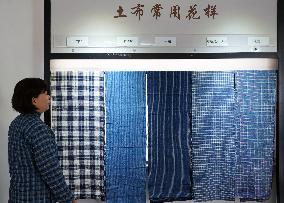
(240308) -- SHANGHAI, March 8, 2024 (Xinhua) -- Shen Jiahui, an inheritor of Tubu (homespun cloth) dyeing and weaving techniques, introduces the patterns on the cloth at a training center in Dongmao Village, Qingpu District of Shanghai, east China, March 7, 2024. Tubu dyeing and weaving craft is a local intangible cultural heritage in Shanghai. The handmade fabric with rich geometric patterns is popular in the countryside of Shanghai. In Dongmao Village, Tubu dyeing and weaving techniques are passed on and developed from generation to generation. In 2021, a training center was set up in the village to better promote the craft. Shen Jiahui, who is in charge of the training center, keeps on designing new products such as hand-bags, toys, and bookmarks, with the trainees. At present, the industry of the homespun cloth has not only increased the incomes for the locals of Dongmao Village, but also brought fame to the village. (Xinhua/Liu Ying)

  • Main
  • Top
  • Editorial
  • Creative
  • About Us
  • About ILG
  • Terms of use
  • Company
  • BEHIND
  • Price List
  • Single Plan
  • Monthly Plan
  • Services
  • Shooting
  • Rights Clearance
  • Support
  • FAQ
  • How To Buy
  • Contact Us
  • Become a Partner

© KYODO NEWS IMAGES INC

All Rights Reserved.

  • Editorial
  • Olympics
  • News
  • Sports
  • Japan
  • Tech
  • Royal
  • Disaster
  • NorthKorea
  • Old Japan
  • SNS
  • Creative
  • Food
  • Japan
  • Landscape
  • Animal
  • Popular
  • #Ukraine
  • #Russia
  • #coronavirus
  • #N. Korea
  • #China
  • #Thailand
  • #Ukraine
  • #Russia
  • #coronavirus
  • #N. Korea
  • #China
  • #Thailand
  • Food
  • Japan
  • Landscape
  • Animal
  • Olympics
  • News
  • Sports
  • Japan
  • Tech
  • Royal
  • Disaster
  • NorthKorea
  • Old Japan
  • SNS